




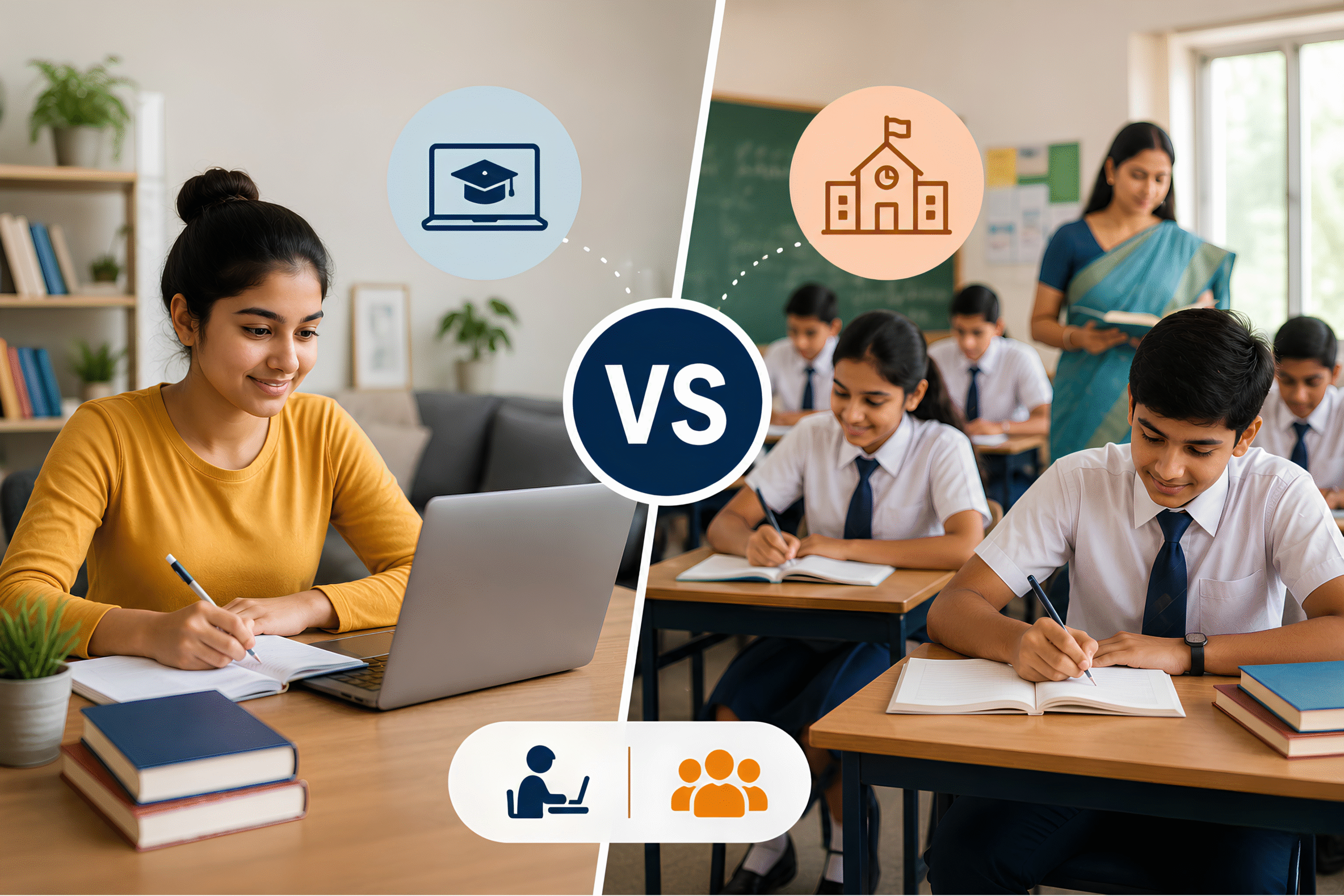
Open vs Regular Schooling is a common comparison for students and parents who want to choose the best education path. Today, learners have more educational options than ever before. While regular schooling provides a structured classroom environment, open schooling offers greater flexibility and self-paced learning. Consequently, students can choose an educational path that aligns with their individual needs, learning styles, and future goals. Moreover, many students, working professionals, and school dropouts often wonder which option is better for their future. Ultimately, the answer depends on individual goals, learning preferences, and career aspirations. This article compares both systems to help you make an informed decision.
What Is Open Schooling?
Understanding Open vs Regular Schooling helps students identify which learning system matches their educational needs and future goals.
In simple terms, open schooling is a flexible education system that allows students to complete their studies without attending daily classroom sessions. Furthermore, learners can study at their own pace through printed materials, online resources, video lectures, and academic support services. Open schooling is designed to make education accessible to students from different backgrounds and circumstances.
Moreover, organizations such as ODLC (Open and Distance Learning Council) support flexible academic pathways through open, distance, blended, and technology-enabled learning models. As a result, students can access quality education in a way that fits their schedules and learning preferences..
What Is Regular Schooling?
Regular schooling is the traditional education system where students attend classes daily in a school environment. Teachers conduct lessons according to a fixed timetable, and students participate in classroom activities, examinations, and extracurricular programs.
Therefore, this model provides structured learning, face-to-face interaction, and a disciplined academic routine.
Open vs Regular Schooling: Key Differences
When comparing Open vs Regular Schooling, it is important to evaluate factors such as flexibility, learning methods, costs, and career opportunities. In addition, understanding these differences can help students make informed decisions about their education and future careers.
| Feature | Open Schooling | Regular Schooling |
|---|---|---|
| Learning Schedule | Flexible | Fixed Timetable |
| Study Mode | Self-Paced Learning | Classroom Learning |
| Attendance | Usually Flexible | Mandatory |
| Learning Resources | Online & Printed Materials | Classroom & Textbooks |
| Location Flexibility | Study from Anywhere | Physical School Required |
| Suitable For | Working Learners, Dropouts, Athletes | Full-Time Students |
| Learning Speed | Student Controlled | School Controlled |
| Cost | Generally More Affordable | Often Higher |
Open vs Regular Schooling: Benefits for Students
Benefits of Open Schooling
The discussion of Open vs Regular Schooling often highlights the flexibility offered by open schooling and the structured environment provided by regular schooling.
Flexible Learning
One of the biggest advantages of open schooling is flexibility. Students can learn according to their own schedules without the pressure of daily attendance. Therefore, this option is particularly beneficial for working professionals, athletes, artists, and learners with family responsibilities.
Learn at Your Own Pace
In addition, students can spend more time on difficult subjects and move faster through topics they already understand. As a result, this personalized approach improves learning efficiency.
Ideal for School Dropouts
Furthermore, open schooling provides a second chance for students who could not complete their education through traditional schooling. Consequently, it helps learners continue their academic journey without restarting from the beginning.
Accessibility
Similarly, students from remote locations can access educational opportunities without relocating or traveling daily. Therefore, open schooling removes many geographical barriers to education.
Skill Development Opportunities
In addition, many open learning institutions provide vocational and skill-based programs that help students develop practical skills and prepare for future careers.
Benefits of Regular Schooling
Structured Learning Environment
Regular schools provide a fixed routine that helps students develop discipline and time-management skills.
Face-to-Face Interaction
Students interact directly with teachers and classmates, which supports collaboration and communication skills.
Extracurricular Activities
Sports, cultural programs, and group activities help students develop leadership qualities and social skills.
Immediate Academic Support
Teachers are available to provide direct guidance, answer questions, and monitor student progress regularly.
Open vs Regular Schooling: Which Option Should You Choose?
Who Should Choose Open Schooling?
Open schooling may be the right option if you:
- Have dropped out of school and want to continue your education.
- Moreover, it is ideal for students who are working while studying.
- Need a flexible learning schedule.
- Live in a remote location.
- Are preparing for competitive exams.
- Participate in sports, arts, or other professional activities.
Who Should Choose Regular Schooling?
On the other hand, regular schooling may be a better choice for students who prefer a structured learning environment.
- Prefer classroom-based learning.
- Need daily teacher guidance.
- Enjoy social interaction and group activities.
- Thrive in a structured educational environment.
- Want a traditional school experience.
Open vs Regular Schooling: Career Opportunities
Many students worry that open schooling may affect their future career opportunities. However, open and distance learning models are widely recognized educational pathways. As a result, they can support access to higher education and employment opportunities when accepted by the respective institution or employer.
Moreover, open schooling allows learners to complete their education while building practical skills and work experience. Therefore, many employers place greater importance on a candidate’s qualifications and abilities than on how they completed their studies.
Open vs Regular Schooling: Which Is Better?
There is no single answer because every learner has different needs. Therefore, the right choice depends on your educational goals, learning preferences, and lifestyle.
Choose Open Schooling if:
- You need flexibility in your study schedule.
- Moreover, you want to continue your education while working.
- In addition, you need an alternative to traditional schooling.
- Furthermore, you prefer self-paced learning and independent study.
Choose Regular Schooling if:
- You prefer a classroom-based learning environment.
- Additionally, you need structured academic support and daily guidance.
- Moreover, you enjoy social interaction and extracurricular activities.
- Finally, you learn best through direct interaction with teachers and classmates.
Conclusion
In conclusion, when comparing Open vs Regular Schooling, the best choice depends on your personal circumstances and future goals. While regular schooling offers structure and classroom interaction, open schooling provides flexibility, accessibility, and opportunities for learners who need alternative educational pathways.
Therefore, students who require a flexible learning environment may find open schooling to be an excellent option for continuing their education and building a successful future. Ultimately, the key is to choose the learning method that aligns with your needs, learning style, and career aspirations.