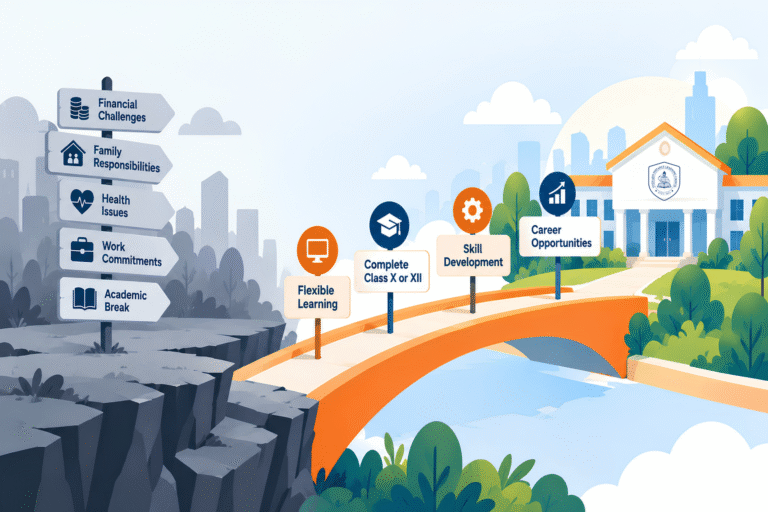






Dropping out of Class 10 or 12 can feel like the end of the road — but in today’s world, it absolutely doesn’t have to be. With flexible learning pathways, skill-based certifications, and open schooling models, it is now possible for any learner to become employable within just 6–12 months.
Organisations like the Open and Distance Learning Council (ODLC) are playing a transformative role in creating alternate education routes for learners who stepped out of formal schooling. According to ODLC (as per information from odlc.ac.in), the Council aims to support Education, Employment, and Empowerment, especially for those who missed traditional education pathways.
Here’s a practical, achievable roadmap for Class 10/12 dropouts to regain direction and become job-ready within a year — with ODLC as a key partner.
Why Class 10/12 Dropouts Need an Alternate Path — Not Just a Second Chance
Every year, lakhs of young learners discontinue school due to personal, financial, or social reasons. Traditional education systems often do not provide flexible options to return. But the job market demands more than just a school certificate — it demands skills.
That’s where ODLC’s dual-model approach becomes powerful:
✔ Academic Certifications (for those who want to complete schooling)
✔ Vocational/Skill Certifications (for those who want fast employment)
This combination allows learners to choose their own pathway depending on their goals.
A 12-Month Roadmap: From Dropout to Employable
Below is a practical, step-by-step route for a learner to become employable in one year using ODLC’s framework of flexible education + vocational skill-building.
Step 1: Re-enter Education Through a Flexible Academic Route (Optional)
For those who want to complete Class 10/12 for career or future education needs, ODLC supports:
- Open learning pathways
- Secondary and senior secondary academic certifications
- Alternative education models designed for working learners
These programs are flexible, allowing students to study through:
- Online classes
- Self-paced modules
- Blended learning
- Local ODLC-affiliated centres
This helps dropouts continue education without pressure.
Step 2: Choose a Skill-Based Course for Fast Employability
For immediate employment, ODLC’s vocational and competency-based certifications are ideal.
These programs are designed especially for:
- School dropouts
- Adult learners
- Youth seeking quick jobs
- Women restarting careers
- Learners in rural and semi-urban areas
ODLC offers practical, job-ready training in fields such as:
- Basic Computer Skills
- Data Entry & Office Administration
- Digital Literacy
- Retail & Customer Service
- Field Technician Skills
- Tailoring & Fashion Designing
- Beauty & Wellness
- Electrical/Technical Trades
- Hospitality Skills
These are hands-on courses, achievable in 3–6 months, and sufficient to unlock entry-level jobs.
Step 3: Train Through an ODLC-Affiliated Skill Hub or Centre
ODLC partners with:
- Coaching centres
- Computer institutes
- NGOs
- Local training academies
- Rural knowledge hubs
This makes skill education accessible even in small towns and villages.
Learners can enroll at their nearest ODLC-affiliated training centre, which provides:
- Training materials
- Practical sessions
- Trainer support
- Assessments
- Certification guidance
The focus is always on ensuring real skills, not just a certificate.
Step 4: Gain Practical Experience Through Projects or Internships
ODLC encourages centres to engage students in:
- Real-world projects
- Hands-on practice
- Local internships
- Community-based assignments
- Practical assessments
This builds confidence and employability.
A learner who can do the work always gets priority in hiring.
Step 5: Earn a Recognised Certification
Upon completing the program, learners receive an ODLC-recognised certificate.
According to ODLC (from odlc.ac.in):
- ODLC is a registered educational society under the Societies Registration Act, 1860
- Certifications follow ODLC’s competency-based and open learning frameworks
- The purpose is Education + Employment + Empowerment for all
While ODLC openly states that certificate acceptance depends on the policies of employers and institutions, the certificates hold value for:
- Entry-level employment
- Skill-based hiring
- Private sector jobs
- Freelancing and self-employment
- Career progression through experience
This makes ODLC certification a strong stepping stone for youth starting their careers.
Step 6: Apply for Jobs or Start Self-Employment
After 6–12 months, learners become eligible for:
Entry-Level Jobs
- Customer Support
- Computer Operator
- Retail Associate
- Receptionist
- Field Technician
- Office Assistant
- Beautician
- Tailor
- Hospitality staff
Freelancing Roles
- Data entry
- Graphic design basics (if trained separately)
- Beauty services
- Stitching & tailoring
- Domestic technical services
Micro-Business Opportunities
- Tailoring shop
- Beauty services at home
- Mobile repair
- Tuition and coaching (after gaining experience)
This path helps learners regain confidence, financial stability, and a sense of direction.
Why ODLC is a Practical Path for School Dropouts
1. No Age Limit and Maximum Flexibility
Learners can rejoin education at any time, regardless of age.
2. Opportunity to Complete Class 10/12 at Their Own Pace
Academic equivalency pathways allow re-entry without rigid schedules.
3. Short-Term Skill Courses for Quick Employment
Ideal for those who need immediate income.
4. Affordable and Community-Based Training
Thanks to ODLC-affiliated local training partners.
5. Recognition Through a Registered Educational Council
ODLC’s structured framework adds credibility to the learner’s journey.
6. Empowerment Through Skills, Not Just Certificates
ODLC focuses on capability, employability, and confidence-building.
Conclusion: A New Beginning Is Just 12 Months Away
Dropping out of school is no longer a dead end.
With flexible learning pathways, skill-based education, and community-driven training models, anyone can turn their life around — regardless of past academic setbacks.
ODLC provides a powerful support system for learners who need:
- A second chance at education
- A fast track to employment
- A practical, skill-based career path
With the right mix of academic flexibility and vocational training, a Class 10 or 12 dropout can become job-ready in as little as one year — and start building a stable, confident, and financially independent future.