




For decades, a college degree was seen as the ultimate gateway to employment. But in today’s rapidly changing job market, that belief no longer holds true. Across India, a widening degree–employability gap has made one fact increasingly clear: degrees alone don’t guarantee jobs—skills do.
As industries evolve faster than academic curricula, employers are prioritising what candidates can do over what certificates they hold. This shift has brought skill-based and vocational education to the centre of employability conversations.
India’s Growing Degree–Employability Gap
India produces millions of graduates every year, yet a significant percentage struggle to find suitable employment. The issue isn’t a lack of education—it’s a mismatch between academic learning and industry requirements.
Common challenges include:
Strong theoretical knowledge but limited practical exposure
Outdated curricula that don’t reflect current industry tools
Minimal hands-on training or workplace readiness
Low confidence in applying knowledge in real-world scenarios
This gap highlights a critical truth: a degree certifies education, but skills drive employability.
Why Skill-Based Training Matters More Than Ever
Skill-based education focuses on application, problem-solving, and performance. It prepares learners to step into roles with confidence and competence from day one.
How Skill Training Aligns with Industry Needs
Emphasis on practical, job-relevant competencies
Exposure to real tools, processes, and workflows
Continuous updates aligned with market demand
Faster transition from learning to earning
This is why many employers today value employability skills—communication, technical ability, adaptability, and digital literacy—over purely academic achievements.
Vocational Education: A Powerful Complement to Degrees
The debate is no longer skill vs degree in India—it’s about how both can work together.
Vocational education bridges the gap by:
Adding hands-on experience to academic knowledge
Making learners job-ready in specific sectors
Offering shorter, focused pathways to employment
Supporting career shifts and upskilling
When combined with academic education, vocational learning enhances credibility and capability—creating well-rounded professionals.
From Qualification to Employability
Employers are increasingly asking:
Can this candidate perform the job from day one?
Do they understand industry expectations?
Can they adapt, learn, and solve problems effectively?
Skill-focused learners often answer “yes” faster than degree-only graduates. That’s why vocational certifications, practical training, and competency-based learning are becoming essential career accelerators.
Building a Future-Ready Workforce
India’s workforce needs:
Industry-aligned skills
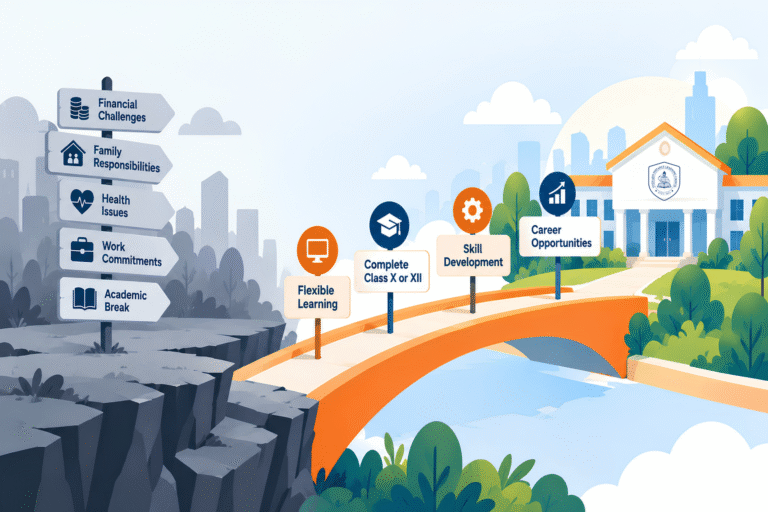
Flexible learning pathways
Continuous upskilling opportunities
Education that adapts to market realities
By integrating vocational education benefits with academic learning, learners can future-proof their careers and remain relevant in a competitive job landscape.
Conclusion
Degrees still matter—but they are no longer enough on their own. In a skills-driven economy, employability is built through practical training, adaptability, and continuous learning.
Whether you’re a student, graduate, or working professional, investing in skill-based and vocational education can be the difference between holding a qualification and building a career.
👉 Explore skill-oriented and vocational learning pathways with ODLC and take a decisive step from education to employability.