




Introduction
Education is no longer limited to classrooms or long-term degree programs. Today, learners need flexible ways to build new skills, stay relevant, and prepare for changing career opportunities. As industries evolve, employers are looking for practical knowledge alongside academic qualifications. Therefore, micro-credentials have become an important part of modern education.
Unlike traditional programs, micro-credentials focus on specific skills that learners can apply immediately. They are shorter, more flexible, and designed to meet current industry needs. As a result, students, working professionals, and lifelong learners can continue their education without putting their careers or personal responsibilities on hold.
At the Open and Distance Learning Council (ODLC), education goes beyond earning qualifications. The institution promotes learner-centric academic pathways, vocational education, and competency-based learning through open, distance, blended, and technology-enabled learning. This approach helps learners build relevant skills while enjoying the flexibility they need to succeed.
What Are Micro-Credentials?
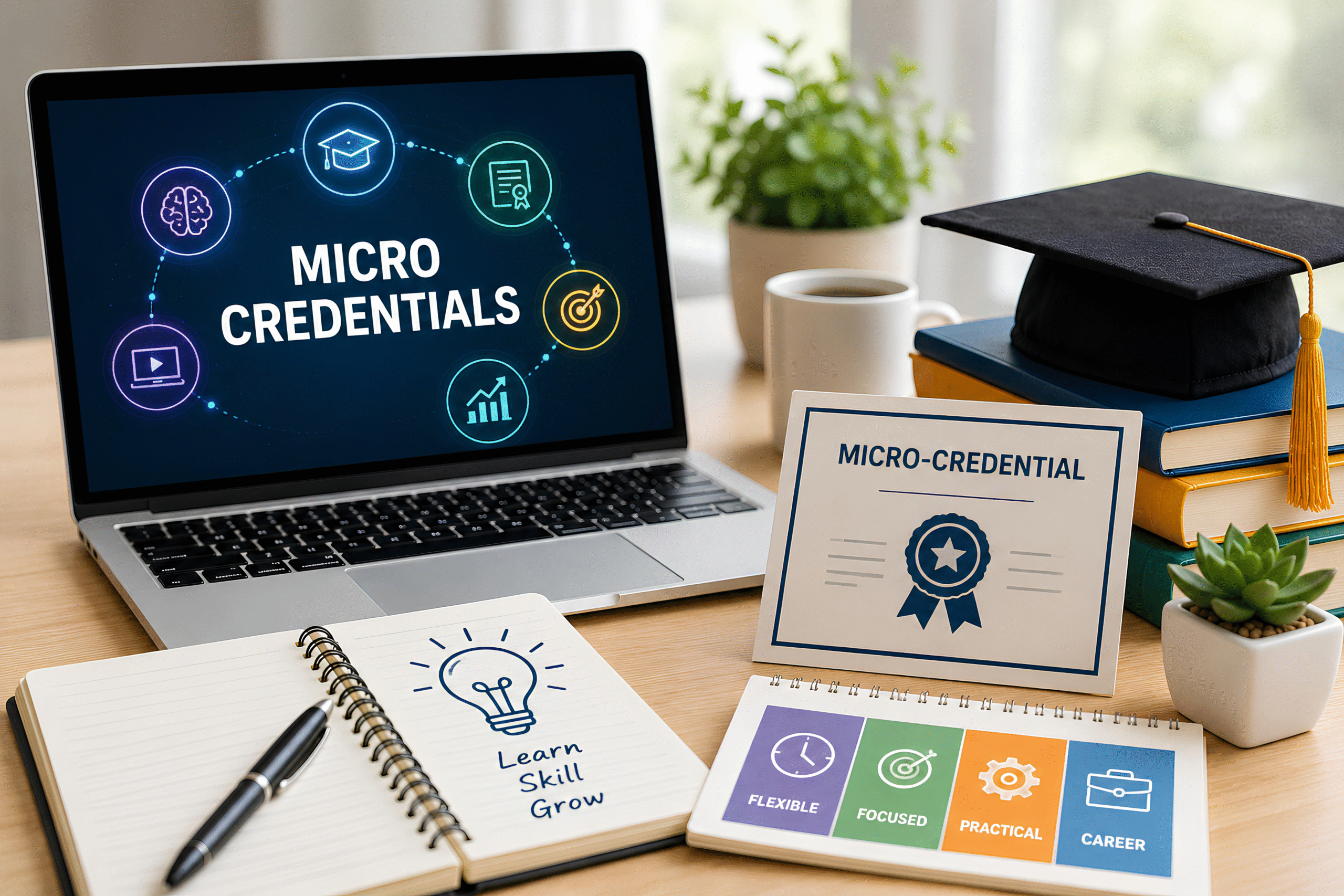
Micro-credentials are short, skill-focused learning programs that certify a learner’s knowledge in a specific subject or competency. Unlike traditional courses that cover multiple topics over several years, these programs concentrate on practical skills that employers value today.
After completing a course, learners receive a digital credential or certificate that verifies their achievement. Consequently, they can showcase their newly acquired skills to employers, educational institutions, or professional networks.
Micro-credentials are becoming increasingly popular because they provide targeted learning without requiring learners to commit to lengthy academic programs.
Why Are Micro-Credentials Becoming So Popular?
Education is changing rapidly. At the same time, industries are adopting new technologies and creating new job roles. Therefore, learners need faster and more flexible ways to keep their skills up to date.
Several factors have contributed to the growing demand for micro-credentials.
1. They Focus on Practical Skills
Employers increasingly value candidates who can demonstrate real-world abilities. While traditional education provides a strong academic foundation, micro-credentials concentrate on job-ready skills that learners can apply immediately.
As a result, graduates become better prepared for today’s competitive job market.
2. They Support Flexible Learning
Not every learner can attend regular classroom sessions. Some are working professionals, while others manage family responsibilities or live far from educational institutions.
Fortunately, micro-credentials allow learners to study through online, blended, or distance learning models. Therefore, they can learn anytime and from anywhere without disrupting their daily lives.
This learner-first approach aligns closely with ODLC’s mission of providing accessible education through flexible learning pathways.
3. They Encourage Lifelong Learning
Learning does not end after graduation. Instead, professionals need to continuously update their knowledge to keep pace with changing industries.
Micro-credentials make lifelong learning easier because learners can complete short programs whenever they need to acquire new skills.
Consequently, they remain relevant throughout their careers.
4. They Improve Career Opportunities
Today’s employers seek candidates who are willing to learn continuously. Therefore, earning micro-credentials demonstrates initiative, adaptability, and commitment to professional growth.
In many cases, these credentials also strengthen resumes, improve interview performance, and increase confidence during career transitions.
How Micro-Credentials Benefit Learners
Micro-credentials provide more than just certificates. They help learners develop practical knowledge that supports both academic and professional growth.
Some of the key benefits include:
- Learning at your own pace
- Developing industry-relevant skills
- Improving employability
- Building confidence through continuous learning
- Exploring new career opportunities
- Supporting career advancement without leaving work
Furthermore, learners can choose programs that match their personal interests and long-term career goals.
How ODLC Supports Skill-Based Learning
At ODLC, learning is designed around the needs of today’s students and professionals. The institution offers flexible academic pathways, vocational education, and competency-based learning that help individuals continue their education regardless of their circumstances.
ODLC’s learner-centric approach focuses on:
- Flexible learning through open, distance, and blended education
- Academic and vocational pathways
- Competency-based skill development
- Secure digital credentials and verification
- Technology-enabled learning support
- Lifelong learning opportunities
Moreover, ODLC integrates digital technologies such as secure credential verification and digital certificate access, making learning more accessible and transparent for modern learners.
Why Micro-Credentials Matter for the Future
The future of education is becoming more flexible and skills-focused. Degrees will continue to play an important role. However, they are no longer the only measure of success.
Instead, learners who combine academic qualifications with practical, industry-focused skills will be better prepared for future opportunities.
Micro-credentials help bridge the gap between education and employment. They also encourage continuous learning, which is becoming essential in today’s rapidly changing world.
As technology continues to reshape industries, learners who regularly update their skills will have a significant advantage.
Conclusion
Micro-credentials are transforming education by making learning more flexible, accessible, and career-focused. They allow learners to gain practical skills, improve employability, and continue learning throughout their lives.
At ODLC, this vision is reflected through learner-centric education, skill development, and technology-enabled learning pathways. By supporting academic growth alongside competency-based education, ODLC helps learners prepare for higher education, professional success, and lifelong learning.
Whether you are starting your educational journey, upgrading your professional skills, or planning your next career move, micro-credentials can provide the knowledge and confidence needed to succeed in an ever-changing world.