




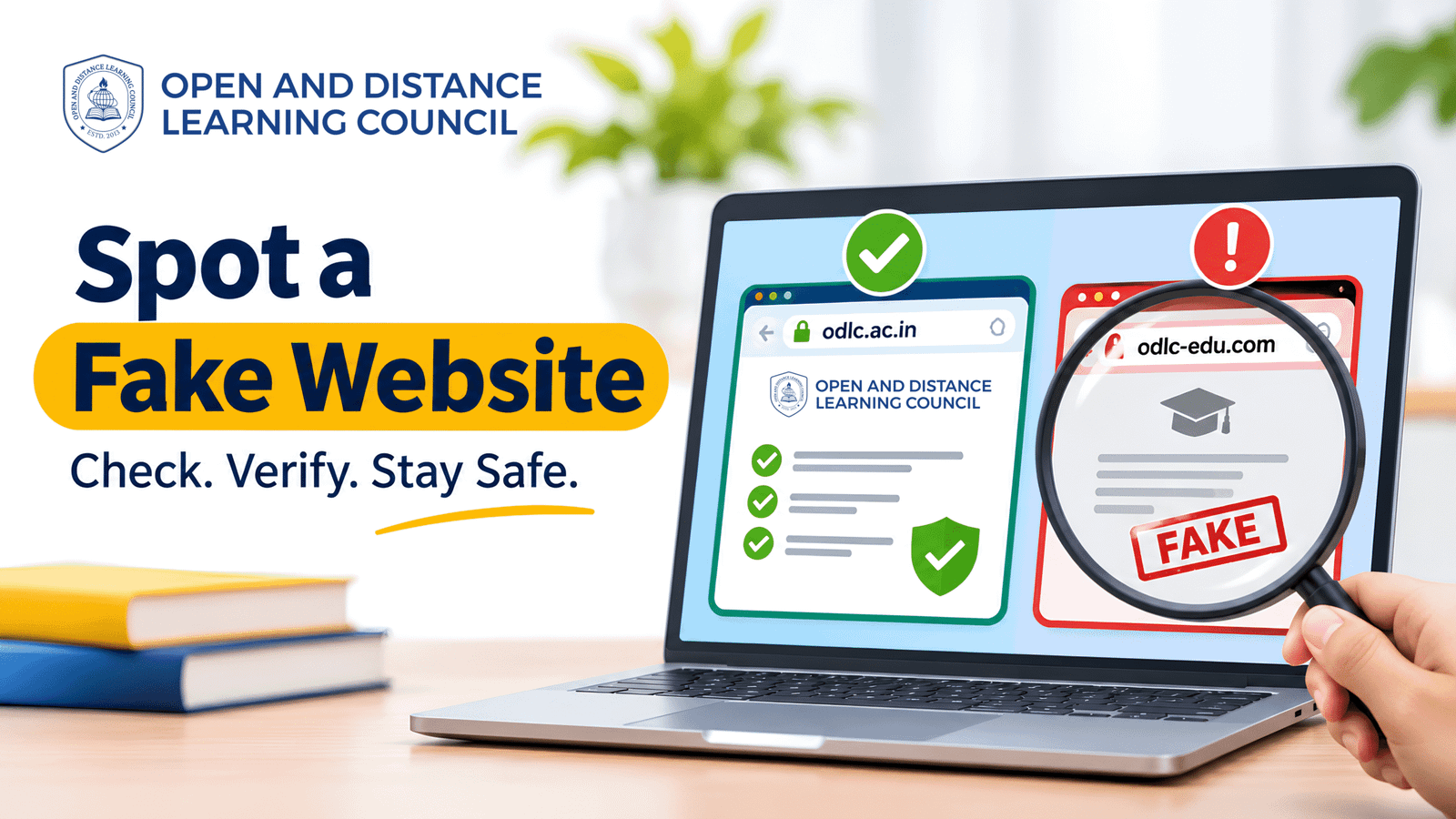
Fake Education Websites can look similar to genuine learning platforms. Therefore, students should carefully check course details, institution information, and recognition claims before enrolling. For example, a website may display professional designs and attractive offers but still provide incomplete or misleading information.
Some websites may use false approval claims, offer unclear certificates, or ask students to pay fees without explaining the course. Therefore, it is important to check an institution before applying.
The Open and Distance Learning Council (ODLC) provides official information about its programmes, admission process, learning centres, assessments, and credentials through its website. This guide explains how students can spot misleading claims and verify education details before enrolling.
Why Should Students Check an Education Website?
First, checking a website helps students understand who is offering the programme. It also helps them confirm whether the centre or representative is authorised to provide the services they claim.
In addition, students should review:
- Programme name and duration
- Learning mode and study requirements
- Eligibility and admission process
- Assessments and examinations
- Fees and payment rules
- Certificate or qualification details
As a result, students can make a more informed choice before sharing documents or paying fees.
1. Check the Official Website and Contact Details
First, review the website address and contact details. Also, compare this information with the institution’s official website. If the details do not match, contact the institution before sharing personal information or making a payment.
A genuine education provider should share clear information about its name, programmes, contact details, and student services.
Before applying, visit the official website directly. Check the domain name carefully and compare it with the website shared in advertisements or messages.
For ODLC-related information, use the official website: odlc.ac.in
If a person contacts you using another website, phone number, or email address, verify the details through ODLC’s official channels before proceeding.
When reviewing Fake Education Websites, compare the website address and contact details with the institution’s official information.
2. Be Careful with False Recognition Claims
Some websites may claim that their courses are approved, recognised, or accepted everywhere. However, these terms can have different meanings.
ODLC describes itself on its official website as an authorized educational institution with defined academic, administrative, examination, and certification processes. It also states that it has been authorised as an Implementing Educational Institution under an applicable government-approved educational framework.
At the same time, students should understand that institutional authorization does not automatically mean recognition by every university, government department, regulator, employer, or professional body.
Therefore, check the specific programme and confirm any external recognition or acceptance requirements with the relevant authority before enrolling. These checks can help students avoid Fake Education Websites or unauthorised pages that claim to represent ODLC.
3. Verify an ODLC Accredited Learning Centre
If you plan to apply through an ODLC Accredited Learning Centre (ALC), verify the centre before submitting documents or making payments.
Check these details:
- Centre name and identification
- Authorization or approval information
- Programme the centre is permitted to offer
- Validity period, where applicable
- Official confirmation from ODLC
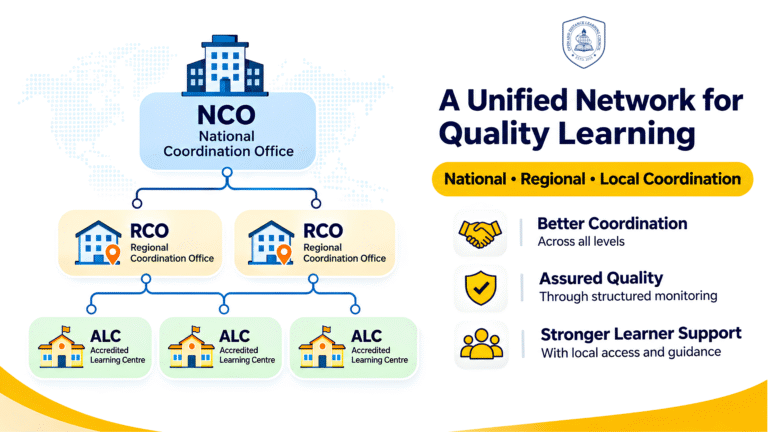
ODLC advises students to use its official centre-verification facility. Only centres listed in current ODLC records should be treated as accredited.
If you cannot confirm a centre’s status, contact ODLC through its official website.
4. Watch for Unrealistic Course or Certificate Promises
Be cautious if a website or representative promises:
- A certificate without completing the required study
- Guaranteed admission without checking eligibility
- Guaranteed jobs after completing a course
- Instant approval or results
- Acceptance by every university or employer
These claims should be checked carefully. At ODLC, admission is subject to eligibility, document verification, programme availability, and approval. Learners must also complete the assessments, examinations, or practical requirements set for their programme.
Therefore, read the official programme details instead of relying only on promotional messages.
5. Review Fees and Payment Methods
A reliable education provider should explain its fees and payment rules clearly.
Before paying, ask for:
- Official fee structure
- Admission and programme charges
- Examination or assessment fees
- Certificate-related charges, if applicable
- Refund and cancellation policy
- Official payment instructions
Always keep a copy of the payment receipt. If someone asks you to transfer money to a personal account or pressures you to pay immediately, pause and verify the request through official channels. Fake Education Websites may hide fees or use pressure tactics. Always confirm payment details through official channels.
6. Check How Certificates and Academic Records Are Verified
A certificate should contain clear details about the learner and the programme. However, a certificate image or screenshot alone may not prove that a record is genuine.
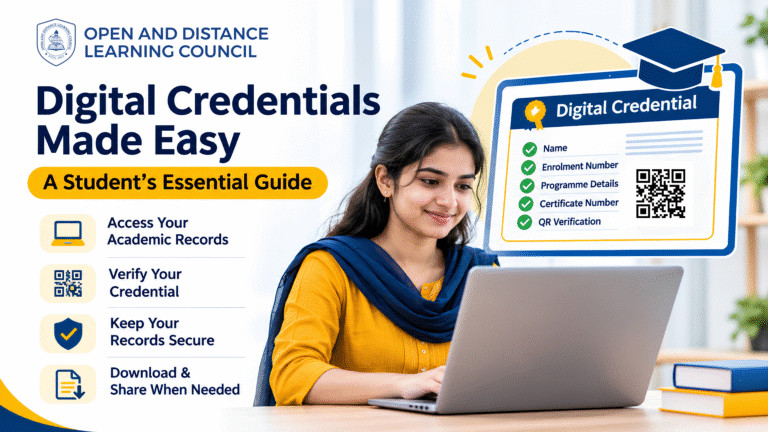
ODLC states that eligible credentials can be supported by digital academic records, QR-enabled verification, DigiLocker access, and official email verification.
Students and employers can use the available official verification options to check credential details. If you have questions about an ODLC credential, contact: verification@odlc.ac.in
Use the official verification process rather than relying only on documents shared through social media or messaging apps. To avoid Fake Education Websites, verify credentials through the issuing institution’s official process rather than relying on screenshots.
7. Know Where to Confirm Information
If you are unsure about a programme, centre, or credential, check the information through official sources.
For ODLC-related details, use:
- Official website: odlc.ac.in
- ALC verification: ODLC’s official centre-verification facility
- Credential verification: ODLC’s official verification service
- Email: verification@odlc.ac.in
- General support: support@odlc.ac.in
For external recognition or eligibility, contact the relevant university, employer, government department, or competent authority directly.
How ODLC Supports Learner Verification
ODLC publishes information about its institutional status, programmes, admission process, assessments, examinations, results, and credentials through its official website.
Its published learner services include digital academic records and verification options for eligible credentials. ODLC also provides a process for checking Accredited Learning Centres.
These official processes help students confirm information before enrolling. However, learners should still review the details of their chosen programme and check any external acceptance requirements that apply to their goals.
Student Checklist: Before You Enroll
Before applying to any education website, ask yourself:
- Is this the institution’s official website?
- Are the contact details clear and verifiable?
- Have I checked the programme details?
- Have I verified the learning centre, if applicable?
- Are the fees and payment rules clearly stated?
- Are recognition and certificate claims supported by official information?
- Do I understand the admission and assessment requirements?
- Have I checked whether the qualification meets my future needs?
If any important detail is unclear, contact the institution or relevant authority before paying.
How to Identify Fake Education Websites
Fake Education Websites may use misleading approval claims, unclear course details, or false promises about certificates and jobs. Before applying, check the official website, verify the learning centre, and review the programme requirements.
Conclusion
Fake education websites and misleading course claims can confuse students and affect their future plans. Therefore, it is important to verify information before enrolling.
Check the official website, review the programme, confirm the learning centre, and understand the fees and credential details. For ODLC programmes, use ODLC’s official channels to verify centre status and eligible credentials.
Most importantly, confirm any external recognition or acceptance requirements with the authority where you plan to use your qualification.
Verify first. Ask questions. Choose with confidence.