




In today’s fast-moving digital world, education is no longer limited by classrooms or geography. Students apply for jobs across countries, professionals pursue online certifications, and institutions issue credentials at scale. But with this growth comes a critical challenge—how can employers, universities, and organizations trust that a certificate is genuine?
This is where digital verification is transforming the education ecosystem.
The Growing Need for Trusted Credentials
Traditional paper certificates have served education systems for decades, but they come with several limitations:
-
Risk of forgery or duplication
-
Physical damage or loss
-
Time-consuming manual verification
-
Difficulty in sharing credentials internationally
As online learning and global hiring continue to grow, these limitations create serious trust issues.
Digital verification solves this problem by making certificates secure, instantly verifiable, and tamper-resistant.
What Is Digital Certificate Verification?
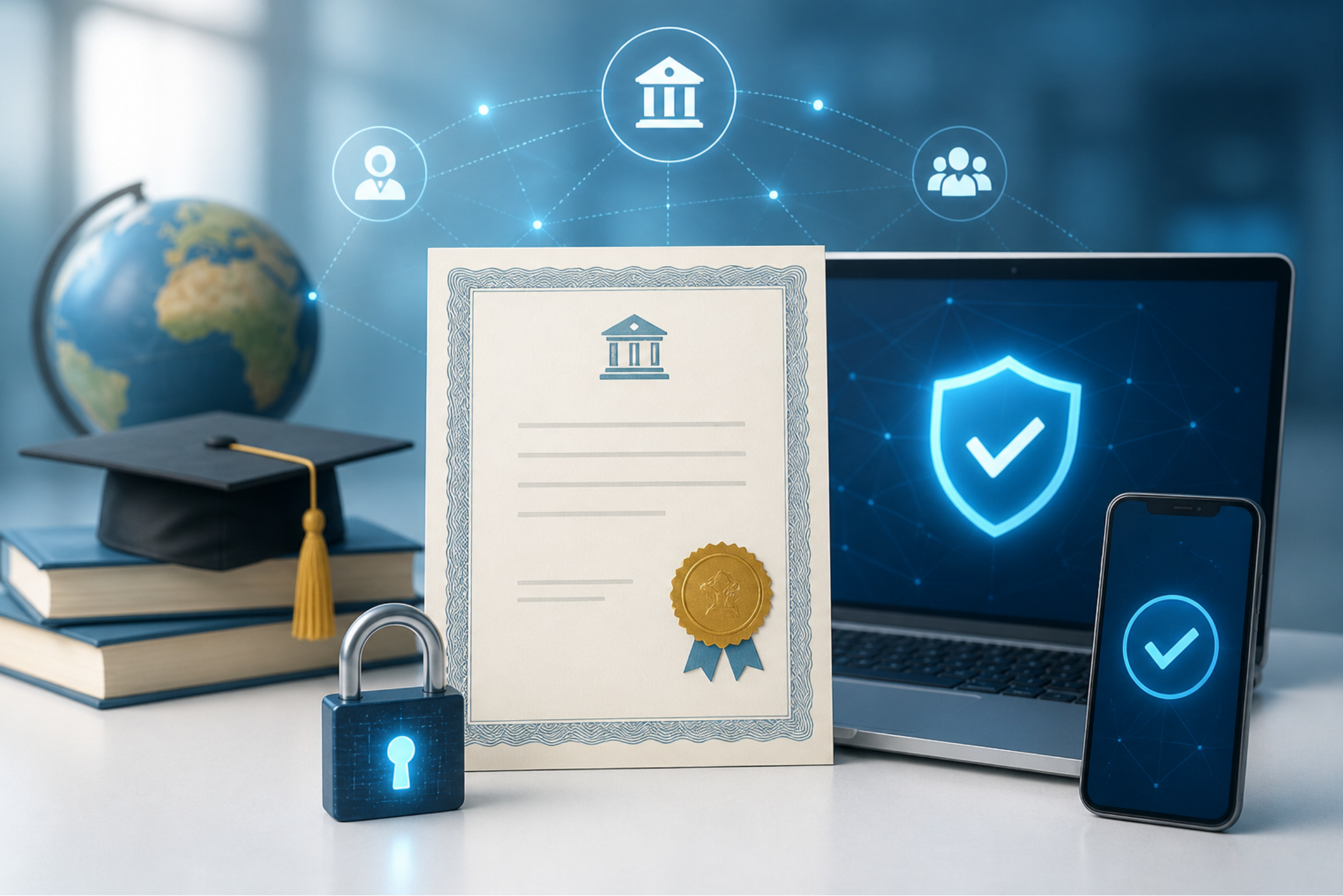
Digital certificate verification is a technology-driven process that confirms the authenticity of an educational credential through secure digital systems.
Instead of manually contacting institutions or checking physical documents, authorized organizations can verify credentials online through:
-
QR codes
-
Secure digital signatures
-
Encrypted databases
-
Blockchain-backed verification systems
India’s government-backed DigiLocker already supports secure issuance and verification of official digital documents and certificates.
How Digital Verification Builds Trust
1. Prevents Fake Certificates
One of the biggest concerns in education and recruitment is fraudulent credentials. Digitally verified certificates contain secure authentication layers that make unauthorized editing or duplication extremely difficult.
Blockchain-based credential systems create tamper-resistant records, reducing the chances of academic fraud.
2. Enables Instant Verification
Employers and institutions no longer need days or weeks to verify academic records.
With digital verification:
-
A certificate can be verified in seconds
-
Recruitment becomes faster
-
Admission processes become smoother
This improves operational efficiency for both institutions and employers.
3. Improves Global Recognition
Students today often apply for opportunities beyond their local region or country. Digital credentials make academic records easier to share and verify internationally.
A secure digital certificate gives global organizations confidence in the authenticity of qualifications.
4. Creates Transparency
Digital verification creates a transparent record of:
-
Who issued the certificate
-
When it was issued
-
Whether it has been modified
-
Whether it is still valid
This builds trust among students, employers, institutions, and regulatory bodies.
5. Gives Learners More Control
Students can securely store, access, and share their credentials whenever needed without worrying about losing physical documents.
Modern digital credential systems allow learners to manage their academic achievements more independently.
Why Educational Institutions Are Adopting It
Schools, universities, training institutes, and skill education providers are increasingly adopting digital verification because it helps them:
-
Protect institutional credibility
-
Reduce administrative workload
-
Build employer confidence
-
Support digital transformation initiatives
India’s National Informatics Centre has also implemented blockchain-based certificate verification initiatives for secure academic document validation.
The Future of Educational Trust
As education becomes more digital, trust becomes more important than ever.
Digital verification is not just a technical upgrade—it is a foundation for a more transparent, secure, and credible education ecosystem.
Institutions that adopt digitally verifiable certificates are not only modernizing their systems—they are building long-term trust with learners, employers, and society.
Final Thoughts
In the modern education landscape, a certificate is more than a document—it is proof of effort, achievement, and capability.
Digital verification ensures that this proof remains authentic, accessible, and trusted anywhere in the world.
Because in education, trust is everything—and digital verification is making that trust stronger than ever.