




Education gaps can happen for many reasons. A student may leave school because of financial problems, family responsibilities, health concerns, relocation, or academic challenges. A working adult may also pause education because regular classes do not fit their schedule.
However, an education gap does not have to stop a learner’s future. With flexible learning pathways, students can return to education, complete important qualifications, and build new skills. This is where second-chance learning can make a real difference.
The Open and Distance Learning Council (ODLC) provides flexible academic and skill-based pathways for learners who want to continue their education through open, distance, blended, and technology-enabled learning.
What Are Education Gaps?
An education gap is a period when a person is unable to continue their formal education.
For example, a learner may complete Class 8 or Class 10 and then stop studying. Another learner may start working and postpone further education. Some learners may also face personal or financial challenges that make regular schooling difficult.
As a result, they may miss important academic qualifications.
However, an education gap does not mean that learning has to end. Instead, flexible education can give learners another way to continue.
Why Do Education Gaps Happen?
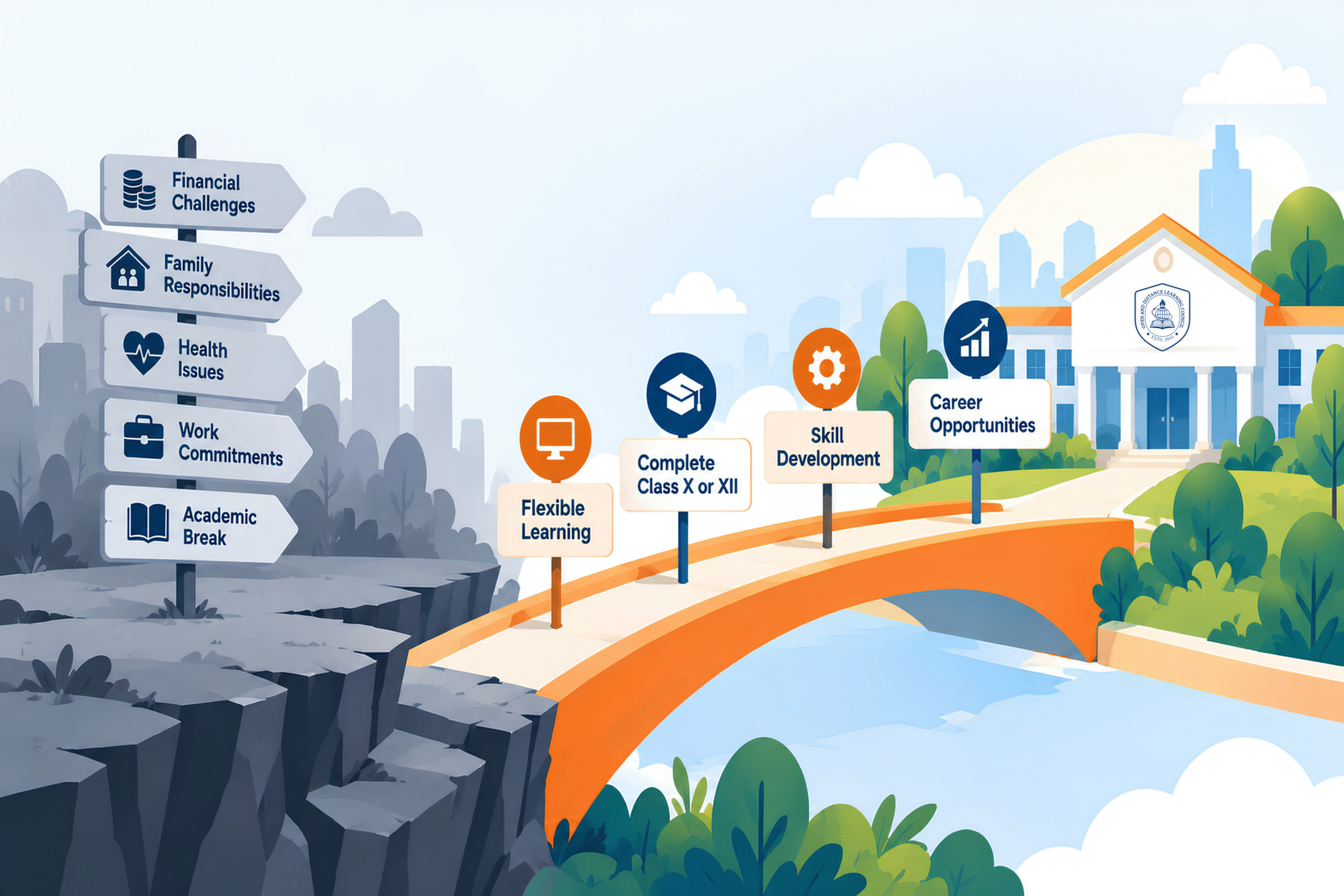
There is no single reason for an education gap. Different learners face different situations.
Some common reasons include:
- Financial difficulties
- Family responsibilities
- Health-related challenges
- Relocation
- Work commitments
- Academic difficulties
- Lack of access to regular education
- Personal circumstances
Therefore, second-chance learning should be flexible and learner-friendly.
A flexible learning model can help learners study while managing their other responsibilities.
Why Second-Chance Learning Matters
Second-chance learning gives people an opportunity to return to education after a break.
For many learners, completing Class X or Class XII can be an important step. It can support further education, skill development, and career planning.
ODLC specifically describes its flexible academic pathways as supporting learners who discontinued their studies, working individuals, homemakers, learners who did not clear examinations, and people looking for career growth.
Therefore, second-chance learning is not simply about going back to school. It is about creating a practical route to continue learning.
How ODLC Supports Learners With Education Gaps
ODLC provides academic pathways through open, distance, online, blended, and technology-enabled learning models.
Its current academic pathways include:
- Secondary Level – Class X
- Senior Secondary Level – Class XII
- Vocational and Skill-Based programmes
- Early Childhood Care and Education programmes
- Other skill and vocational pathways
As a result, learners can explore different options based on their educational background and goals.
At the same time, students should always check the eligibility and requirements of the specific programme before applying.
Completing Class X After an Education Gap
For learners who have not completed Class X, the ODLC Secondary Level programme provides an open and distance learning pathway.
According to ODLC’s programme information, learners must meet the stated eligibility requirements. The programme has a minimum age requirement of 14 years, and registration is stated as valid for five years.
Students can choose subjects according to the programme’s subject-selection rules. The programme also provides learning support and mobile-friendly access to learning resources.
Therefore, learners who paused their schooling can explore a structured route to continue their academic journey.
Completing Class XII After an Education Gap
Class XII can also be an important step for learners who want to continue their education after Class X.
ODLC’s Senior Secondary Level programme is designed for learners who have completed Class X from a recognised board. The programme is offered through open, distance, and online learning modes.
Students can select subjects according to the programme guidelines. Learning resources and academic support are also part of the programme structure.
As a result, learners can continue their academic journey without depending only on a traditional classroom schedule.
Education Gaps and Working Learners
Work is another common reason why people may pause education.
For a working learner, attending regular classes every day may not be practical. However, flexible education can make it easier to balance work and learning.
ODLC promotes flexible learning models that support learners with different schedules. Its vocational and skill education pathways also focus on practical and industry-relevant competencies.
Therefore, learners can consider academic education and skill development as part of a longer-term career plan.
Education Gaps and Skill Development
Completing an academic qualification is important. However, many learners also want practical skills.
ODLC places a strong focus on vocational and skill education. Its programmes cover areas such as computer applications, data entry, web development, graphic design, digital marketing, accounting, tourism, hospitality, healthcare, and other skill areas.
This approach can help learners connect education with practical skill development.
For example, a learner returning to education may complete an academic qualification and then explore a suitable skill programme. Another learner may combine academic learning with vocational education where the programme structure allows it.
Therefore, second-chance learning can be part of both academic and career development.
How Flexible Learning Helps Close Education Gaps
Flexible learning can reduce some of the barriers faced by learners who cannot follow a traditional schedule.
1. Flexible Study
Learners can study according to their available time and learning needs.
2. Distance and Online Access
Learning through distance and technology-enabled systems can help learners continue their studies without depending entirely on a physical classroom.
3. Academic Support
Learners can access academic guidance and support services provided through the programme.
4. Skill-Based Options
Vocational programmes can help learners build practical and job-related skills.
5. A Structured Learning Path
A clear programme structure can help learners move from admission to learning, assessment, and certification.
Together, these features can create a more accessible path for people who have experienced education gaps.
A Simple Second-Chance Learning Path
Returning to education does not need to feel complicated.
Learners can follow a simple process:
Step 1: Understand Your Education Level
First, identify the highest qualification you have completed.
Step 2: Identify Your Goal
Next, decide whether you want to complete Class X, Class XII, gain a skill, or continue toward another academic goal.
Step 3: Check Eligibility
Then, review the eligibility requirements of the selected ODLC programme.
Step 4: Prepare Your Documents
Keep the required academic and identity documents ready for the admission process.
Step 5: Apply Through the Official Process
Complete the application according to the current ODLC admission instructions.
Step 6: Start Learning
After the admission process is completed, use the available learning resources and academic support.
Step 7: Prepare for Assessment
Follow the programme’s assessment and examination requirements.
Step 8: Plan Your Next Step
After completing the programme, consider higher education, vocational training, skill development, or career opportunities based on your goals.
Education Gaps Do Not Define a Learner
An education gap is only one part of a person’s journey.
A learner may have gained work experience, practical knowledge, or other skills during the time away from formal education. Therefore, returning to education can help connect previous experience with new academic or vocational learning.
Second-chance learning can also help learners rebuild confidence. Step by step, they can work toward completing their education and preparing for their next goal.
Why Education Gaps Should Not Stop Future Plans
Education is not always a straight path.
Some people complete school without interruption. Others take a different route. Both journeys can involve effort, learning, and personal growth.
That is why flexible education matters.
When learning pathways are designed around different learner needs, people can get another opportunity to continue their education. ODLC’s stated mission includes promoting inclusive and lifelong learning and supporting open, distance, blended, and online education systems.
Therefore, learners with education gaps can explore flexible pathways that match their circumstances.
Things to Check Before Choosing a Programme
Before applying, learners should carefully check:
- Programme eligibility
- Course duration
- Learning mode
- Subject requirements
- Assessment structure
- Examination requirements
- Required documents
- Admission instructions
- Certification details
- Requirements of the institution or authority where the qualification will be used
This is important because programme rules can differ.
Also, students should use the official ODLC website for the latest programme and admission information.
Important Note About Recognition
Students should check the acceptance requirements of the organisation where they plan to use an ODLC qualification.
ODLC states that final recognition or acceptance of a qualification is determined by the receiving institution, employer, government department, or other relevant authority according to its applicable rules and policies.
Therefore, learners should confirm these requirements before enrolling if their goal involves higher education, employment, licensing, or another formal use of the qualification.
How Second-Chance Learning Opens New Doors
An education gap may create a pause, but it does not have to become a permanent barrier.
With flexible academic pathways, learners can return to education. They can complete important qualifications, develop practical skills, and prepare for their next stage.
ODLC’s combination of academic pathways, vocational education, flexible learning models, and digital systems provides learners with different ways to continue their education.
Most importantly, second-chance learning gives learners a chance to move forward.
Final Thoughts
Education gaps can happen at different stages of life. However, a break in education does not have to mean the end of a learner’s goals.
Second-chance learning can provide a practical way to return to education. With flexible programmes, academic support, skill development, and structured learning pathways, learners can take the next step at a pace that fits their situation.
If you have experienced an education gap, start by understanding your current qualification, identifying your goal, and checking the available options.
Your education journey may have taken a different path. That does not mean your next opportunity is out of reach.