




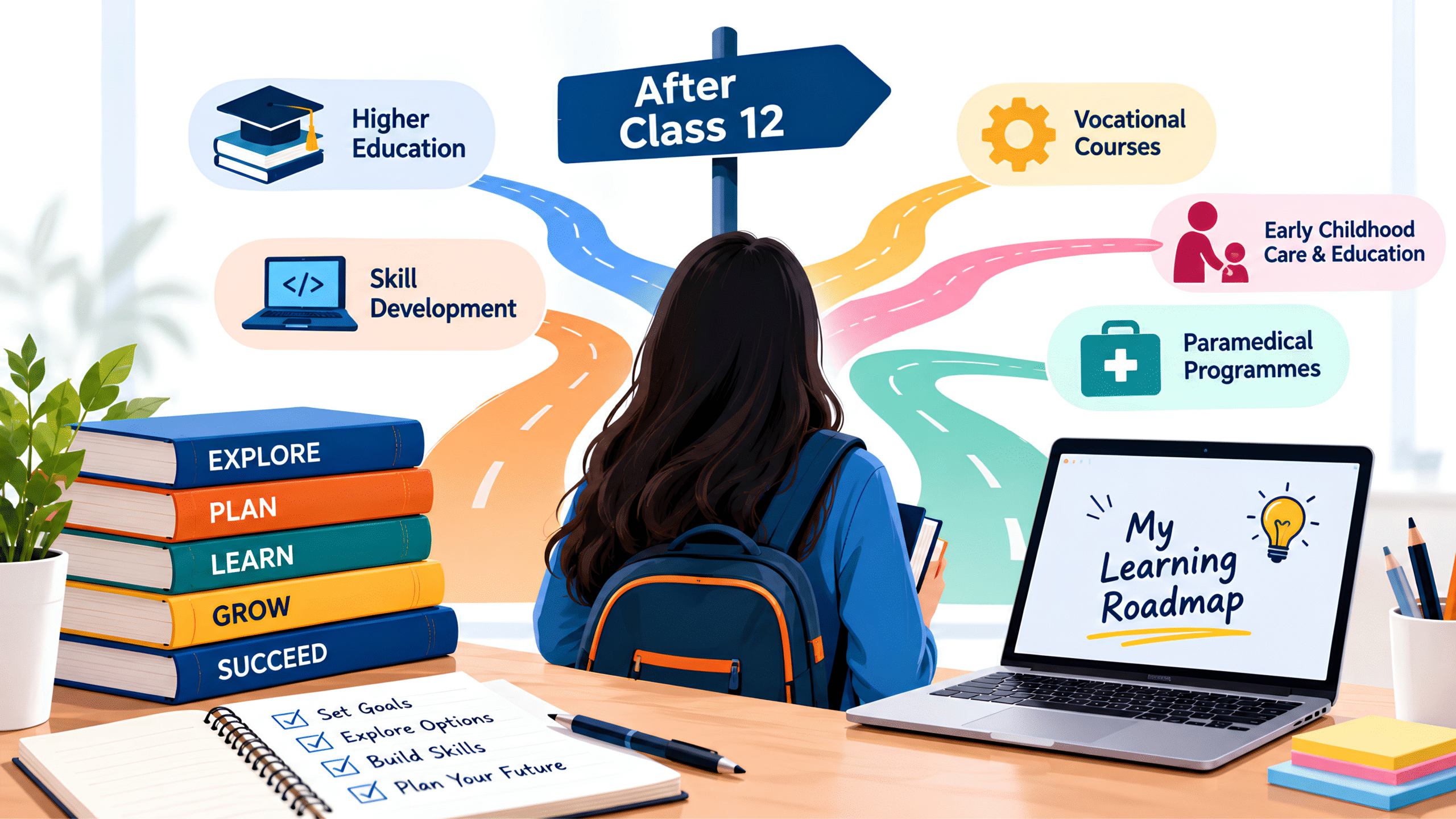
Completing Class 12 is an important milestone in every student’s life. It marks the end of school education and opens the door to new learning opportunities. However, many students feel confused about what to do next. Some want to continue their academic studies, while others want to develop practical skills or explore vocational courses. A clear Learning Roadmap can help students make informed decisions about their future. It allows them to identify their interests, understand their options, and choose a suitable direction for further learning.
At the Open and Distance Learning Council (ODLC), learners can explore academic and vocational learning pathways. These include Senior Secondary Level programmes, skill-based courses, Early Childhood Care and Education (ECCE), and paramedical programmes, subject to the applicable eligibility requirements.
In this guide, we will explain how to create a Learning Roadmap after Class 12 and how ODLC learning options may fit into your plans.
1. Understand Your Interests and Career Goals
Before choosing a course, take time to understand your interests. Think about the subjects you enjoyed in school, the activities you like, and the type of work you may want to do in the future.
For example, students interested in technology may want to explore computing or data-related skills. Those who enjoy working with people may consider business, hospitality, or other service-related fields. Similarly, students interested in education may explore relevant learning pathways.
However, do not select a course only because it is popular. Instead, consider your strengths, interests, financial situation, and long-term goals.
Ask yourself these questions:
- Which subjects or activities interest me most?
- Do I want to continue academic education or develop practical skills?
- What knowledge or skills do I need for my preferred career?
- What are my budget, time, and location requirements?
Once you understand your priorities, you can create a Learning Roadmap that better matches your needs.
2. Explore Your Learning Options After Class 12
After completing Class 12, students can consider different educational and skill-development options. The right choice depends on their goals, eligibility, and the requirements of the field they want to enter.
Academic Education
Students who want to continue formal academic studies can explore undergraduate programmes and other higher education opportunities. Before applying, check the eligibility criteria, admission requirements, subject prerequisites, and recognition status of the institution and programme.
Vocational and Skill-Based Learning
Vocational learning focuses on developing knowledge and practical skills for specific areas of work. Depending on the programme, learners may explore fields such as technology, business, hospitality, creative industries, or technical services.
ODLC publishes information about skill and vocational programmes, including certificate, diploma, and advanced diploma pathways. Programme availability, duration, and eligibility should be checked on the official website before applying.
Early Childhood Care and Education
Students interested in early childhood learning can explore relevant ECCE programmes. Before enrolling, review the course level, eligibility requirements, learning outcomes, and any conditions related to employment in the intended role.
Paramedical Learning
Learners interested in healthcare support may explore suitable paramedical programmes. However, healthcare roles can have specific qualification, practical training, registration, or licensing requirements. Therefore, verify the requirements of the relevant authority before choosing a programme.
Exploring these options will help you identify a suitable direction for your Learning Roadmap.
3. Choose a Course That Matches Your Goals
Once you understand the available options, compare courses carefully. Do not focus only on the course name or duration. Instead, examine what you will learn and how the programme fits your future plans.
Consider the following factors:
- Eligibility: Check whether you meet the educational and other entry requirements.
- Course content: Review the subjects, modules, practical activities, and learning outcomes.
- Duration: Choose a programme that fits your schedule and commitments.
- Learning mode: Check whether the programme is offered through distance, online, offline, or blended learning.
- Assessment: Understand the examination, assignment, practical, and completion requirements.
- Future opportunities: Research whether the qualification meets the requirements of the university, employer, or professional authority you intend to approach.
ODLC offers different learning pathways, but each programme may have its own conditions. Therefore, review the relevant course information before making a final decision.
A carefully selected course can make your Learning Roadmap more focused and manageable.
4. Understand How ODLC Can Fit Into Your Learning Roadmap
ODLC provides information about academic and skill-development pathways for learners with different educational interests. Depending on your goals and eligibility, you can explore the programmes that match your learning needs.
Its published programme categories include:
- Senior Secondary Level – Class XII
- Skill and vocational programmes
- Early Childhood Care and Education (ECCE)
- Paramedical programmes
If you have already completed Class 12, you may wish to explore vocational or skill-based learning that supports your interests. For example, a student who wants to build practical technology skills can review relevant technology-related programmes. Similarly, learners interested in business or hospitality can explore suitable options where available.
However, the right pathway depends on your individual goals. A vocational certificate is not automatically a substitute for a degree, professional licence, or qualification required for a particular job.
Before applying, review the course details, eligibility criteria, fees, learning mode, assessment requirements, and the acceptance conditions of the institution or employer where you intend to use the qualification.
5. Identify the Skills You Need to Develop
A Learning Roadmap should include more than choosing a course. It should also identify the knowledge and skills you need to develop over time.
For example, many learning and work environments benefit from communication, problem-solving, digital literacy, time management, and teamwork. Depending on your chosen field, you may also need technical knowledge or practical experience.
Start by identifying the skills you already have. Next, make a list of the skills you want to improve.
For example:
| Learning goal | Possible action |
|---|---|
| Improve communication | Practise writing, speaking, and presentations |
| Develop digital skills | Learn relevant computer applications and tools |
| Build technical knowledge | Study subject-specific concepts and complete suitable practice tasks |
| Improve time management | Follow a weekly study plan |
| Gain practical experience | Work on projects or seek relevant supervised experience |
You do not need to develop every skill at once. Instead, focus on the skills that are most relevant to your chosen learning pathway.
6. Create a Realistic Learning Plan
After selecting a suitable course and identifying your skill needs, create a plan that you can follow consistently.
Divide your goals into short-term and long-term steps. For example, your short-term goal may be to compare courses and complete the admission process. Your next goal may be to finish the first set of lessons or complete a practical learning activity.
A simple plan can look like this:
Step 1: Explore
Research suitable courses, compare requirements, and identify the programmes that match your goals.
Step 2: Decide
Choose a learning pathway after reviewing eligibility, course content, duration, fees, and future requirements.
Step 3: Prepare
Organize your documents, set a budget, and plan the time you will need for study.
Step 4: Learn
Follow your study schedule, complete lessons, revise important concepts, and practise relevant skills.
Step 5: Review
Check your progress regularly and adjust your plan when your goals or circumstances change.
Remember that a Learning Roadmap should guide you, not create unnecessary pressure. Set realistic targets and make changes when needed.
7. Build Good Study Habits
Good study habits can help you make steady progress, particularly when you are learning through distance or blended methods.
First, create a regular study schedule. Choose study hours that fit your daily routine and responsibilities.
Next, organize your study materials. Keep notes, course information, assignments, and other learning resources in separate folders so you can find them easily.
In addition, revise lessons regularly instead of waiting until an examination is near. Practise what you learn and note the topics that require more attention.
You should also check official programme updates and follow the instructions provided for your course. If you have questions, seek clarification through the appropriate support channels.
These habits can help you stay organized and make your Learning Roadmap easier to follow.
8. Review Your Progress and Update Your Roadmap
Your interests and goals may change as you gain new knowledge and experience. Therefore, review your Learning Roadmap from time to time.
Ask yourself whether your chosen course still matches your goals. Check which skills you have developed and which areas need improvement. If you discover a new interest, research it before deciding whether to change direction.
You can maintain a simple progress record with three sections:
- Completed: Courses, lessons, and skills you have finished.
- In progress: Tasks and learning goals you are currently working on.
- Next steps: New skills, courses, projects, or applications you want to explore.
This approach helps you see your progress and decide what to do next.
However, before changing courses or enrolling in an additional programme, review the relevant eligibility and completion requirements. If you plan to use a qualification for higher education, employment, or a regulated profession, confirm its acceptance with the receiving institution or authority.
Common Mistakes to Avoid When Planning After Class 12
Students sometimes make decisions without researching their options fully. Avoiding these common mistakes can help you create a more useful Learning Roadmap.
Choosing a course only because of trends: A popular course may not match your interests or strengths. Compare its content and requirements with your goals.
Ignoring eligibility criteria: Always check the admission requirements before applying.
Focusing only on certificates: Learning the required knowledge and developing relevant skills are also important.
Overlooking practical experience: Where appropriate, look for projects, practical activities, or supervised experience related to your chosen field.
Assuming every qualification is accepted everywhere: Recognition and acceptance can depend on the receiving university, employer, professional body, or other competent authority. Verify the requirements before enrolling.
Setting unrealistic targets: A plan that does not fit your available time or budget can be difficult to maintain. Start with manageable steps and review your progress.
By avoiding these mistakes, you can make more informed decisions about your education and future.
Conclusion
Creating a Learning Roadmap after Class 12 is an important step toward planning your education and skill development. It helps you understand your interests, compare learning options, identify the skills you need, and decide on practical next steps.
ODLC offers academic and vocational learning pathways that students can explore according to their goals and eligibility. By reviewing the official programme details, understanding the applicable requirements, and building consistent study habits, you can make more informed choices about your learning journey.
You do not need to plan your entire future in one day. Start by identifying your goals, researching suitable programmes, and creating a realistic plan.
Take your next step with a clear Learning Roadmap, keep developing your skills, and review your progress as your goals grow.