




Flexible Learning gives students the opportunity to study in ways that fit their educational needs, schedules, and personal responsibilities. For many learners, studying at home offers greater convenience. However, learning from home also requires planning, concentration, and regular effort.
Students following open and distance learning pathways may need to manage their study time independently. Therefore, creating a suitable learning environment and developing good study habits can make a real difference.
The Open and Distance Learning Council (ODLC) provides information about academic and vocational learning pathways. Students can explore the programmes relevant to their goals and review the applicable eligibility requirements before enrolling.
What Is Flexible Learning?
Flexible Learning refers to learning approaches that allow students to manage aspects of their learning according to their needs and circumstances. Depending on the programme, this may involve distance learning, online resources, independent study, or blended learning methods.
For example, a student may plan study sessions around work or family responsibilities. Another learner may use a personal timetable to revise lessons and practise important concepts.
However, flexibility does not mean that students can ignore course requirements. Learners still need to follow the instructions, assessments, deadlines, and other conditions applicable to their programmes.
Why Is a Good Learning Environment Important?
A suitable learning environment can help students concentrate and use their study time effectively. When learners have a quiet place, organized materials, and a regular routine, it becomes easier to focus on their lessons.
On the other hand, noise, frequent interruptions, and an unplanned schedule can make studying more difficult. Therefore, students should create a learning space that suits their home environment. Even a small desk or a quiet corner can be useful when it is organized and used regularly.
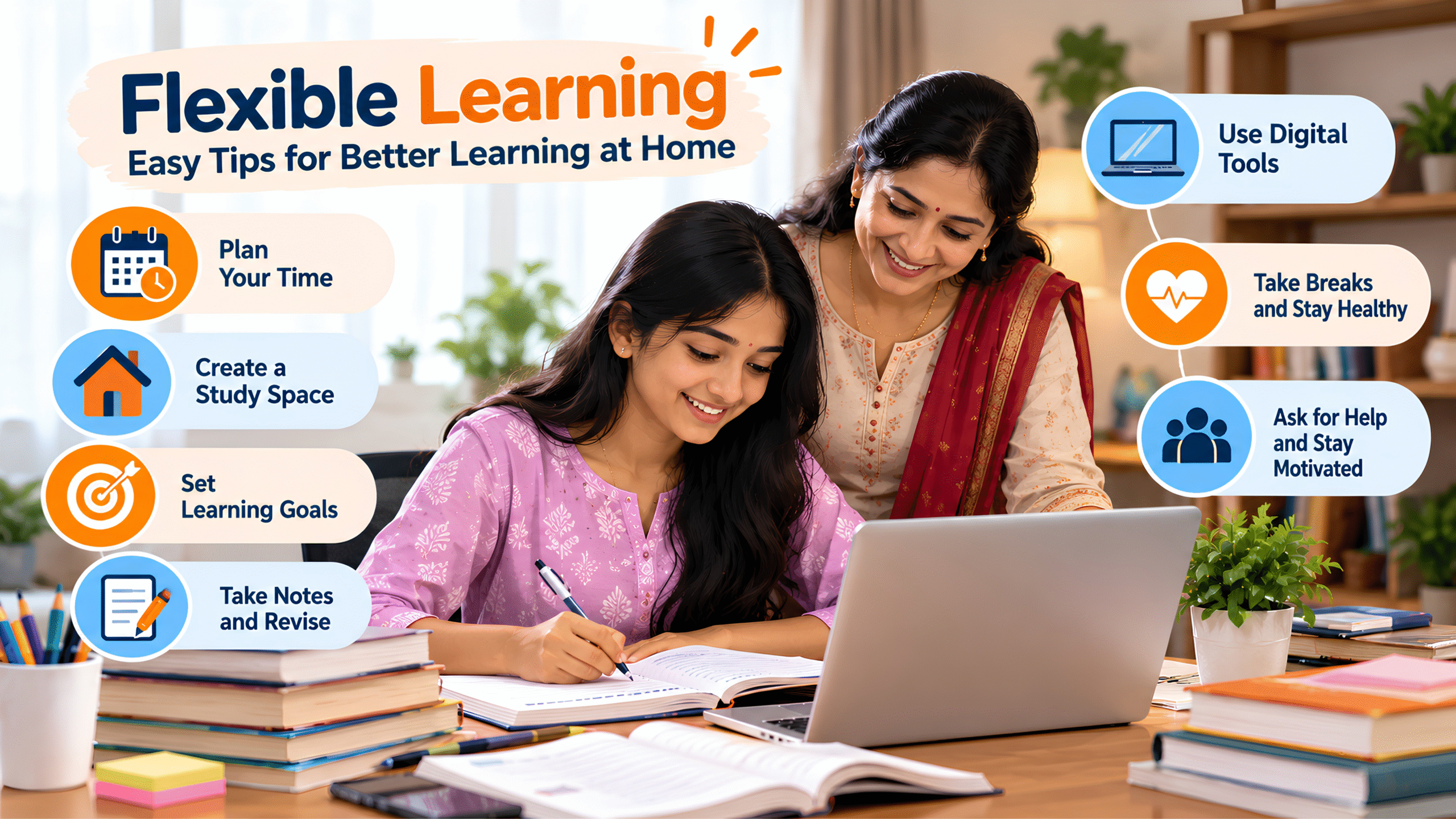
Few Easy Flexible Learning Tips for Better Learning at Home
1. Create a Regular Study Schedule
First, decide when you can study comfortably each day. Choose study hours that fit your daily responsibilities and learning goals. For example, you may prefer studying in the morning before other activities begin. Alternatively, you may find evenings more suitable.
Divide your available time between reading lessons, preparing notes, practising questions, and revising important topics. Also, include short breaks to avoid tiredness. Most importantly, choose a realistic schedule that you can follow regularly.
2. Set Up a Comfortable Study Space
Your study space does not need to be large or expensive. Instead, focus on creating an area where you can work comfortably. Keep your books, notebooks, stationery, and learning materials within reach.
If you use a computer or mobile device, make sure it is ready before your study session begins. In addition, turn off unnecessary notifications and avoid using social media during study time. These small changes can help you concentrate better.
3. Set Small and Clear Learning Goals
Large learning tasks can sometimes feel difficult to manage. Therefore, divide them into smaller goals. For example, instead of planning to complete an entire subject in one day, aim to finish one lesson or understand a specific topic.
You can write your goals in a notebook or use a simple checklist. Once you complete a task, mark it as finished. This approach helps you track progress and identify what you need to do next.
4. Take Notes and Revise Regularly
Reading a lesson once may not be enough to remember all the important information. For this reason, note-taking and revision are useful parts of Flexible Learning. Write important concepts, definitions, examples, and questions in your own words.
After completing a lesson, spend a few minutes reviewing the main points. Later, return to the same topic to check how much you remember. If you find a concept difficult, revisit the lesson or seek clarification through the learning support channels available to you.
5. Use Digital Learning Tools Wisely
Digital tools can help students organize their learning activities. For example, a digital calendar can remind you about study sessions, while note-taking applications can help you keep information organized.
A laptop or mobile device may also be useful for accessing learning materials and other relevant educational resources, depending on your programme. However, use reliable sources and follow the instructions provided for your course.
ODLC publishes information about its academic and vocational learning pathways through its official website. Students should check the relevant programme details and follow the applicable instructions.
6. Take Breaks and Maintain a Healthy Routine
Studying for long periods without a break can make it harder to concentrate. Therefore, divide your study time into manageable sessions. After completing a task, take a short break. You can stretch, walk around, drink water, or rest your eyes before returning to your lessons.
In addition, try to maintain a regular sleep schedule and make time for physical activity and other daily responsibilities. A balanced routine can help you feel more prepared for learning.
7. Ask for Help When You Need It
Independent learning does not mean that you must solve every problem alone. If you find a lesson difficult, identify the exact point you do not understand. First, review your notes and study materials. Next, consult suitable learning resources or seek clarification through the support channels available for your programme.
For ODLC learners, it is important to check official programme instructions whenever questions arise about eligibility, study requirements, assessments, or other academic matters. Asking for help at the right time can prevent confusion and help you move forward with greater confidence.
How Parents Can Support Flexible Learning at Home
Parents and family members can play an important role in creating a positive learning environment. Their support does not need to involve teaching every subject. Often, small actions can make studying easier.
- Respect study time and avoid unnecessary interruptions.
- Encourage students to organize their tasks and take responsibility for their learning.
- Help keep essential books, stationery, and learning materials available.
- Recognize progress and appreciate consistent effort.
- Listen when students face difficulties and help them identify practical next steps.
- Encourage regular breaks, sufficient rest, and a balanced routine.
However, every learner has different needs. Parents should offer support while allowing students to develop independence and confidence.
Common Challenges in Flexible Learning and How to Overcome Them
Although Flexible Learning offers convenience, students may face difficulties when studying at home. Recognizing these challenges can help learners find practical solutions.
Distractions at home: Choose a regular study area, turn off unnecessary notifications, and explain your study schedule to family members.
Difficulty managing time: Break large tasks into smaller activities and use a weekly timetable.
Lack of motivation: Set achievable goals, track completed tasks, and remind yourself why your education matters.
Trouble understanding lessons: Review the relevant material, practise examples, and seek clarification when needed.
Unorganized study materials: Keep separate folders or notebooks for each subject and maintain a checklist of important tasks.
Feeling overwhelmed: Reduce your daily workload to manageable tasks and adjust your schedule when necessary.
How ODLC Fits Into Flexible Learning
ODLC provides information about academic and vocational learning pathways for learners with different educational interests. Students can explore the published programme categories and review the options that match their goals and eligibility.
Before choosing a programme, learners should check its entry requirements, course content, duration, fees, learning method, and assessment conditions. They should also confirm whether the qualification will be accepted by the university, employer, or professional authority where they intend to use it.
Flexible study habits can help learners organize their time and complete their work. However, the exact learning methods and requirements depend on the selected programme.
Conclusion
Flexible Learning can help students manage their education alongside their personal responsibilities. However, learning effectively at home requires a suitable environment, clear goals, regular study habits, and a willingness to ask for help when needed.
By following a study schedule, organizing learning materials, revising lessons, using digital tools wisely, and maintaining a balanced routine, students can make their learning experience more productive. Parents can also contribute by offering encouragement, respecting study time, and helping students build independence.
For ODLC learners, the first step is to understand the requirements of their chosen programme and plan their studies accordingly. Start with one or two simple changes, follow them consistently, and gradually develop a routine that supports your educational goals.
Make Flexible Learning work for you by creating a study routine that fits your life, supports your progress, and helps you keep moving toward your goals.