





Introduction
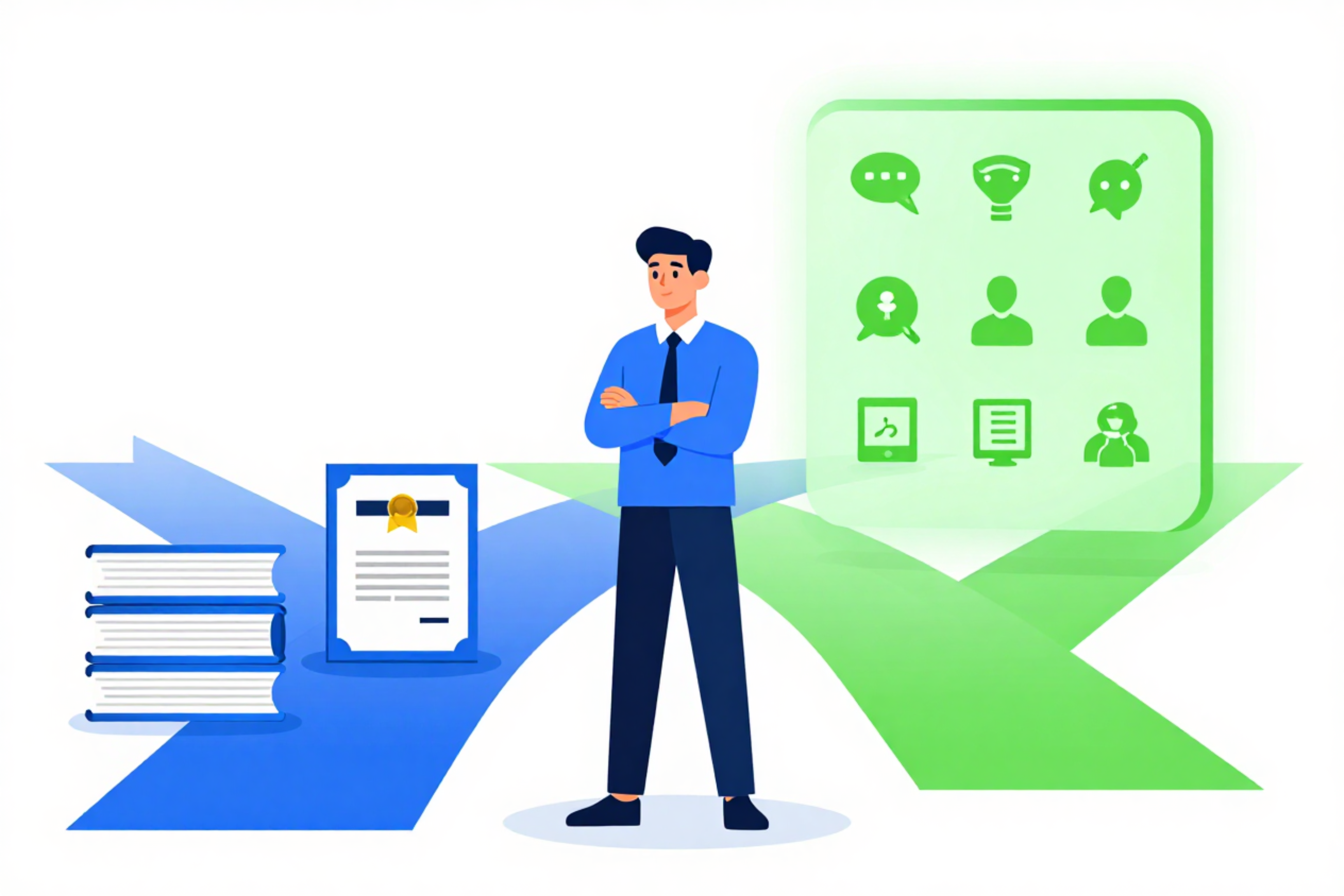
A degree can open the door to a career. However, it is not the only thing employers look for today. Companies also want people who can apply their knowledge, solve problems, communicate well, and adapt to change.As a result, skills beyond academic degrees are becoming more important in the modern job market. Employers want to understand what a candidate can actually do, not only what they have studied.
This shift is also changing the way people learn. Instead of focusing only on academic qualifications, learners are now adding practical training, vocational education, certifications, and work-based skills to their profiles.
Therefore, skill-based education can play an important role in preparing learners for a changing workplace.
What Are Skills Beyond Academic Degrees?
Skills beyond academic degrees are practical and professional abilities that complement formal education. These skills can help learners apply their academic knowledge in real situations.
For example, employers may look for:
- Communication skills
- Problem-solving skills
- Digital skills
- Teamwork
- Time management
- Adaptability
- Leadership
- Technical skills
- Industry-specific knowledge
- Practical work experience
Academic education provides a foundation. However, these additional skills can help learners use that foundation more effectively.
For this reason, modern education is moving towards a balance between knowledge and practical ability.
Why Skills Beyond Academic Degrees Matter
The workplace is changing quickly. New technologies are creating new roles, while existing jobs are also changing. Therefore, employers need people who can learn and adapt.
Skills Beyond Academic Degrees Show Practical Ability
A degree shows that a learner has completed an academic program. However, employers may also want evidence that the learner can use what they know.
For example, a learner may understand digital marketing concepts. However, practical experience with content, analytics, or digital tools can make that knowledge more useful.
Similarly, a learner with technical knowledge can benefit from hands-on training. As a result, practical learning can help connect education with workplace needs.
Skills Beyond Academic Degrees Support Employability
Employability is not based on one qualification alone. Instead, it depends on a combination of knowledge, skills, attitude, and experience.
Therefore, learners can strengthen their profiles by developing skills that match their career goals.
For instance, a student interested in technology can build digital and technical skills. In the same way, a learner interested in business can develop communication, management, and analytical skills.
However, having a particular skill does not guarantee employment. Employers also consider experience, role requirements, interview performance, and other factors.
What Skills Do Employers Value?
Different industries need different skills. Nevertheless, several skills are useful across many careers.
Communication Skills
Good communication helps employees share ideas clearly. It also supports teamwork and customer interaction.
Therefore, learners should develop both written and verbal communication skills. These skills can be useful during interviews as well as in the workplace.
Problem-Solving Skills
Workplaces often involve challenges. Employees need to understand problems, consider possible solutions, and make sensible decisions.
As a result, problem-solving is an important skill in many industries.
Digital Skills
Technology is now part of almost every industry. Consequently, basic digital skills are becoming essential for many roles.
Depending on the career, learners may also need more advanced skills in areas such as data, digital marketing, software, cybersecurity, or web development.
Teamwork
Most workplaces involve collaboration. Employees may work with colleagues, customers, managers, or external partners.
Therefore, teamwork and interpersonal skills can make a significant difference in professional life.
Adaptability
Industries continue to change. New tools, systems, and work methods appear regularly.
For this reason, employers value people who are willing to learn and adapt. Continuous learning can help professionals remain prepared for new opportunities.
How ODLC Supports Skills Beyond Academic Degrees
The Open and Distance Learning Council (ODLC) places strong emphasis on academic education, vocational education, skill development, and competency-based learning. Its stated objective is to expand access to these learning pathways through open, distance, blended, and technology-enabled systems.
This approach is important because learners do not always follow the same educational path. Some may want academic qualifications, while others may want practical skills. Others may want to combine both.
Therefore, ODLC supports learning pathways that connect academic education with vocational and competency-based development.
Skill-Based Education by ODLC
ODLC identifies skill and vocational education as an important part of its educational initiatives. Its vocational approach focuses on developing industry-relevant competencies and supporting employability and skill progression.
Moreover, ODLC offers vocational and skill-based certification programs across areas such as digital technology, data, healthcare, beauty and wellness, and other fields. Its current vocational program information also describes blended learning that combines online, distance, and practical training.
As a result, learners can explore education that goes beyond classroom theory.
How ODLC Connects Learning With Practical Skills
One major advantage of skill-based education is its focus on application.
ODLC’s vocational model includes theory along with practical or workshop learning and, depending on the program, internship or project components. Assessment can also include written examinations, skill demonstrations, and internship evaluation.
This combination helps learners understand both what they are learning and how the knowledge can be applied.
Therefore, practical learning can become an important part of career preparation.
Competency-Based Learning at ODLC
Knowledge is only one part of learning. The ability to demonstrate a skill is also important.
ODLC supports competency assessment and skill validation frameworks. These frameworks can help recognize learning and experience gained through work, training, or non-traditional learning routes.
Consequently, competency-based learning gives greater attention to what a learner can demonstrate.
This approach is especially useful in a workplace where practical performance matters.
Flexible Learning for Modern Learners
Not every learner can follow a fixed classroom schedule. Students may have work, family responsibilities, or other commitments.
Therefore, flexible learning can make skill development easier to access.
ODLC supports open, distance, blended, and technology-enabled learning systems. Its website also highlights flexible access to learning resources, academic guidance, and certification support.
As a result, learners can explore education in a way that better fits their individual needs.
Digital Credentials and Skill Verification
Today, employers and institutions also need reliable ways to verify qualifications.
ODLC states that it uses digitally generated certificates and secure verification systems. Its vocational programs also describe QR-coded digital certificates and online verification.
This can make it easier to verify a learner’s credential and maintain a clear digital record.
However, learners should always check whether a particular qualification meets the requirements of the employer, university, or authority they plan to approach.
How Learners Can Build Skills Beyond Academic Degrees
Building useful skills does not happen in one day. Instead, it is a continuous process.
Learners can start by identifying the skills needed for their chosen career. Next, they can select suitable courses or training programs. Then, they can practise those skills through projects, practical work, internships, or other real-world activities.
In addition, learners can:
- Build a portfolio of their work.
- Take part in practical projects.
- Improve communication skills.
- Learn relevant digital tools.
- Seek feedback from trainers and mentors.
- Keep learning as industry needs change.
Most importantly, learners should choose skills that match their career goals rather than collecting certificates without a clear purpose.
Why Skill-Based Learning Matters for the Future
The future of work will continue to change. Technology will create new opportunities, while some existing roles will require new skills.
Therefore, continuous learning will become increasingly important.
A strong education pathway can combine academic knowledge with practical skills. In this way, learners can build a broader foundation for future opportunities.
ODLC’s focus on vocational education, competency-based learning, and flexible learning reflects this shift towards more accessible and skill-focused education.
Conclusion
A degree remains valuable. However, today’s career landscape requires more than academic knowledge alone.
Skills beyond academic degrees can help learners demonstrate practical ability, adaptability, communication, and industry knowledge. As a result, combining academic learning with skill development can create a stronger foundation for career growth.
ODLC supports this approach through academic pathways, vocational and skill development, competency-based learning, and flexible learning models. Its focus on practical training and digital credential verification also reflects the growing need for skills that can be demonstrated and verified.
Ultimately, education is not only about what you learn. It is also about how you use that knowledge. By developing relevant skills alongside academic qualifications, learners can become better prepared for a changing world of work.